

ZISHI TU(Yuxi Chen)
Mix Media, Installation
3D Art
Zishi Tu(Yuxi Chen) is a London-based Installation Artist and 3D Artist. Her practice explores the construction of imaginary worlds through cuteness, mythology, play, and dark fantasy. Working across interactive installation, pen plotter painting, visual games, animation, and 3D digital media, she creates characters and environments that exist between tenderness and unease.
Her work centres on the idea of building a “Second world” through cute characters. These figures inhabit strange, playful, and sometimes unsettling spaces, inviting audiences to enter a world where softness becomes powerful, and cuteness becomes a language for storytelling, transformation, and resistance.
Her mechanical and digital works have been presented at the V&A Digital Design Weekend, the British Embassy in Paris, Strait Culture Art Center in Fuzhou.
︎︎︎CV
︎︎︎Recent Works
︎︎︎3D Works
︎︎︎Artstation
Codename: J__Who is in Kit
Mechanical Devices
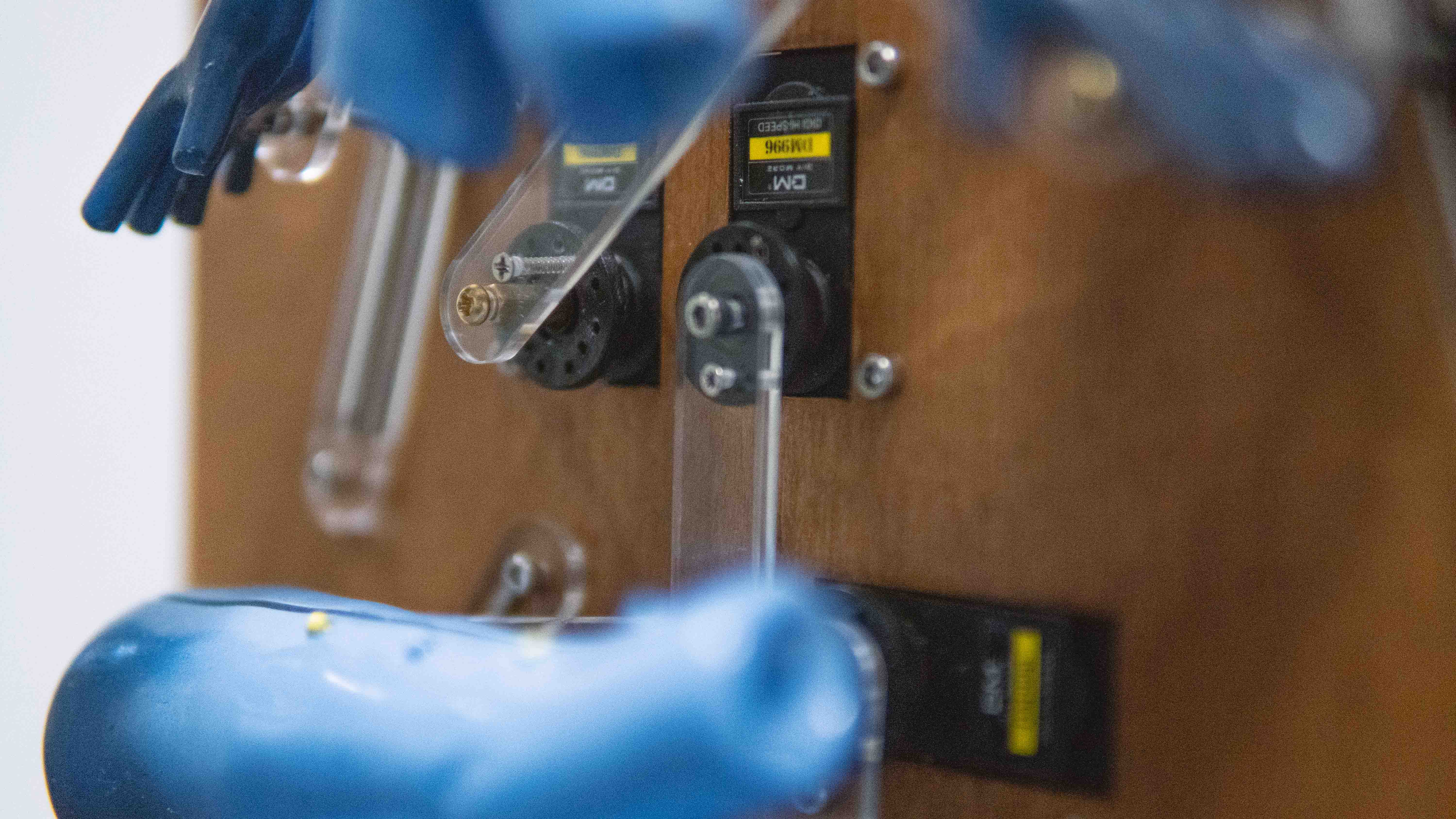
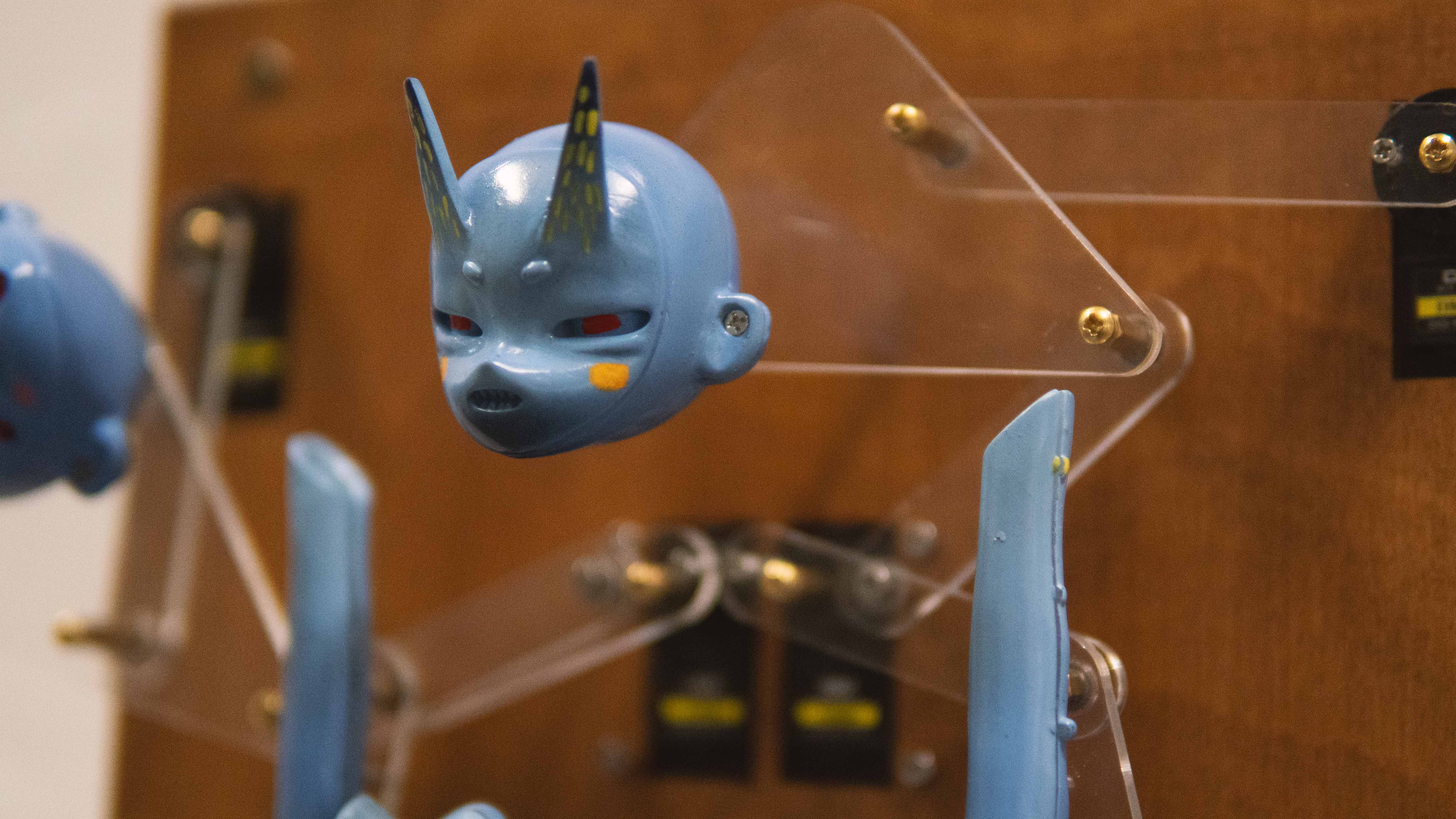
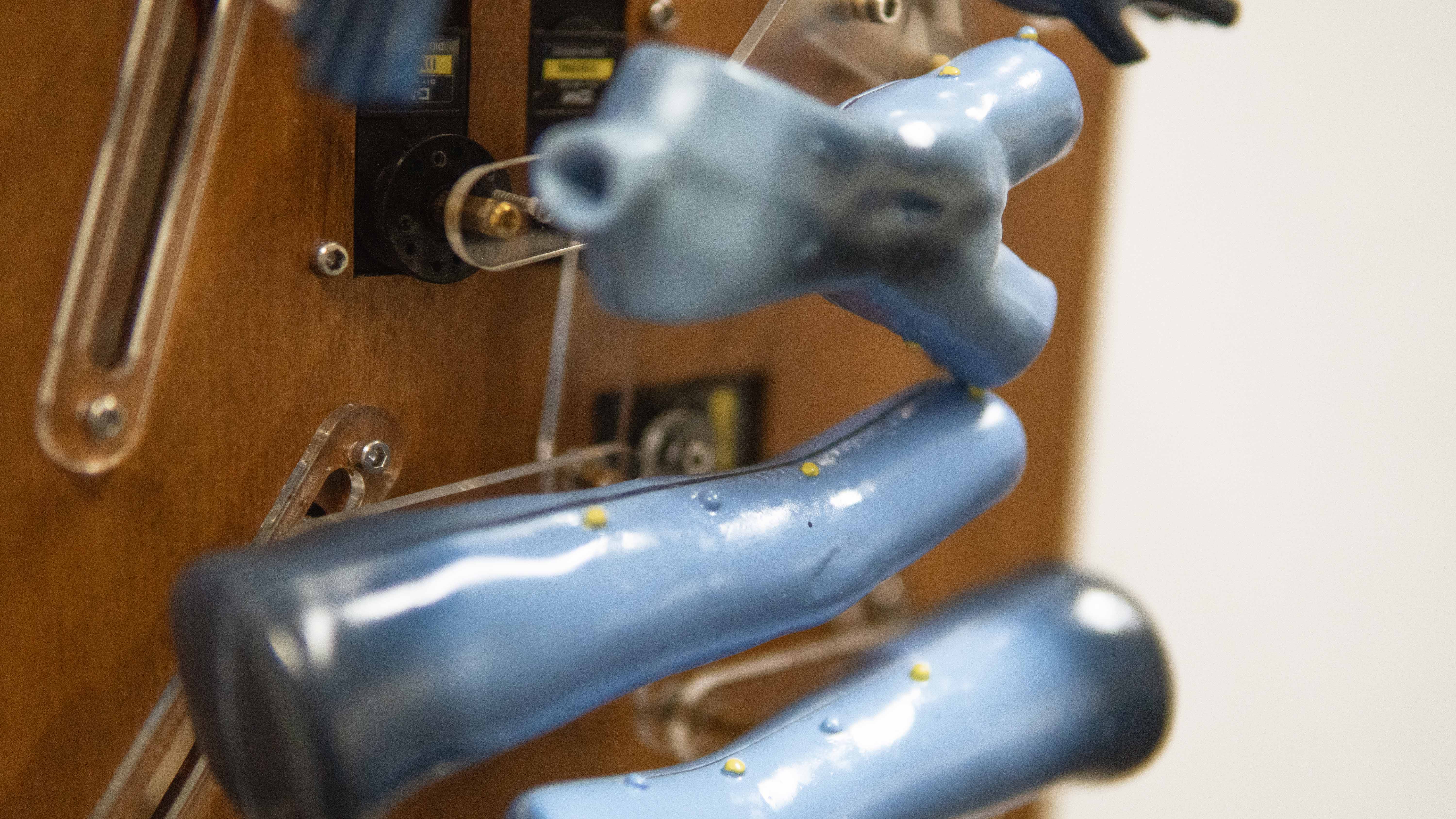
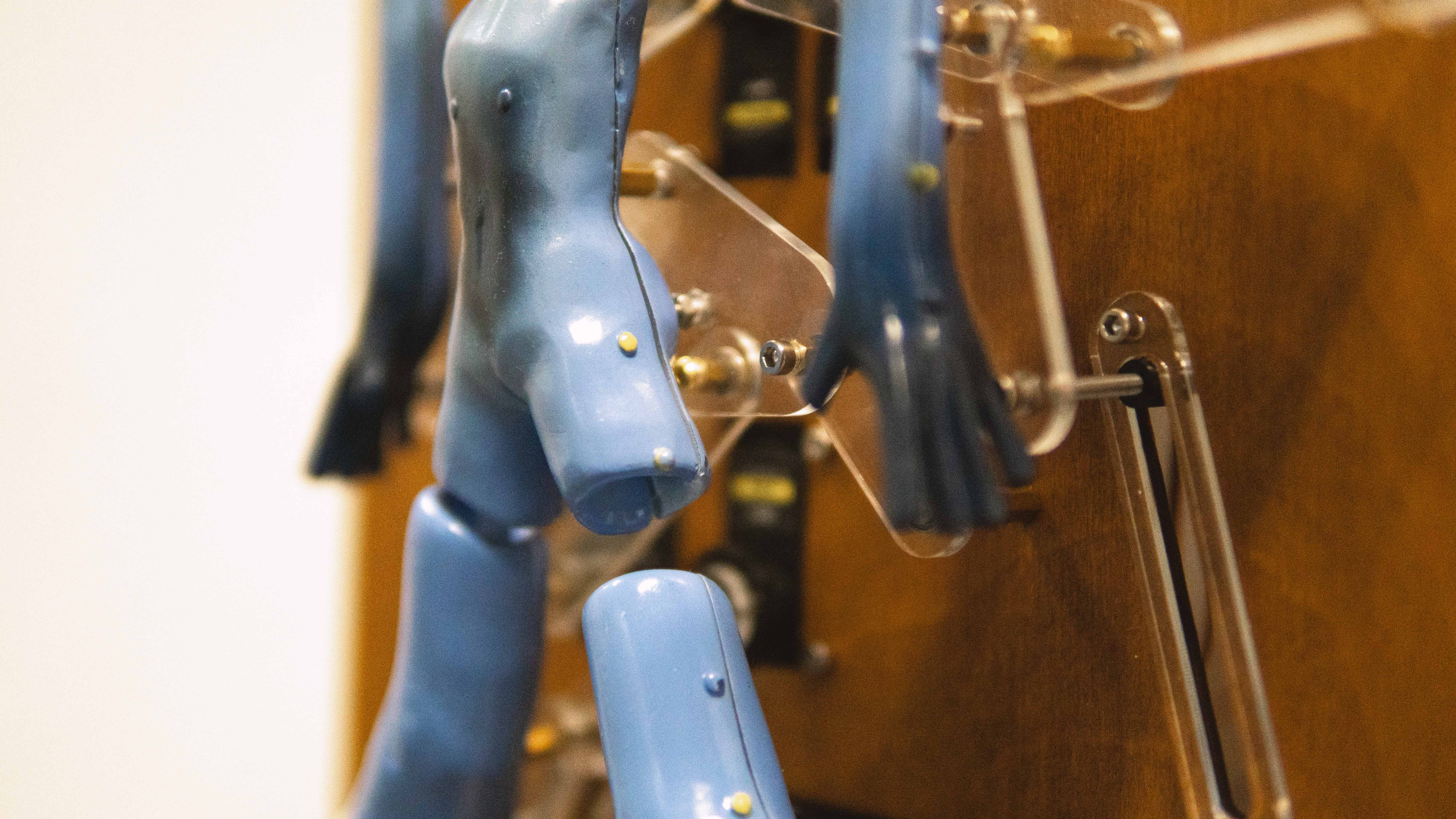
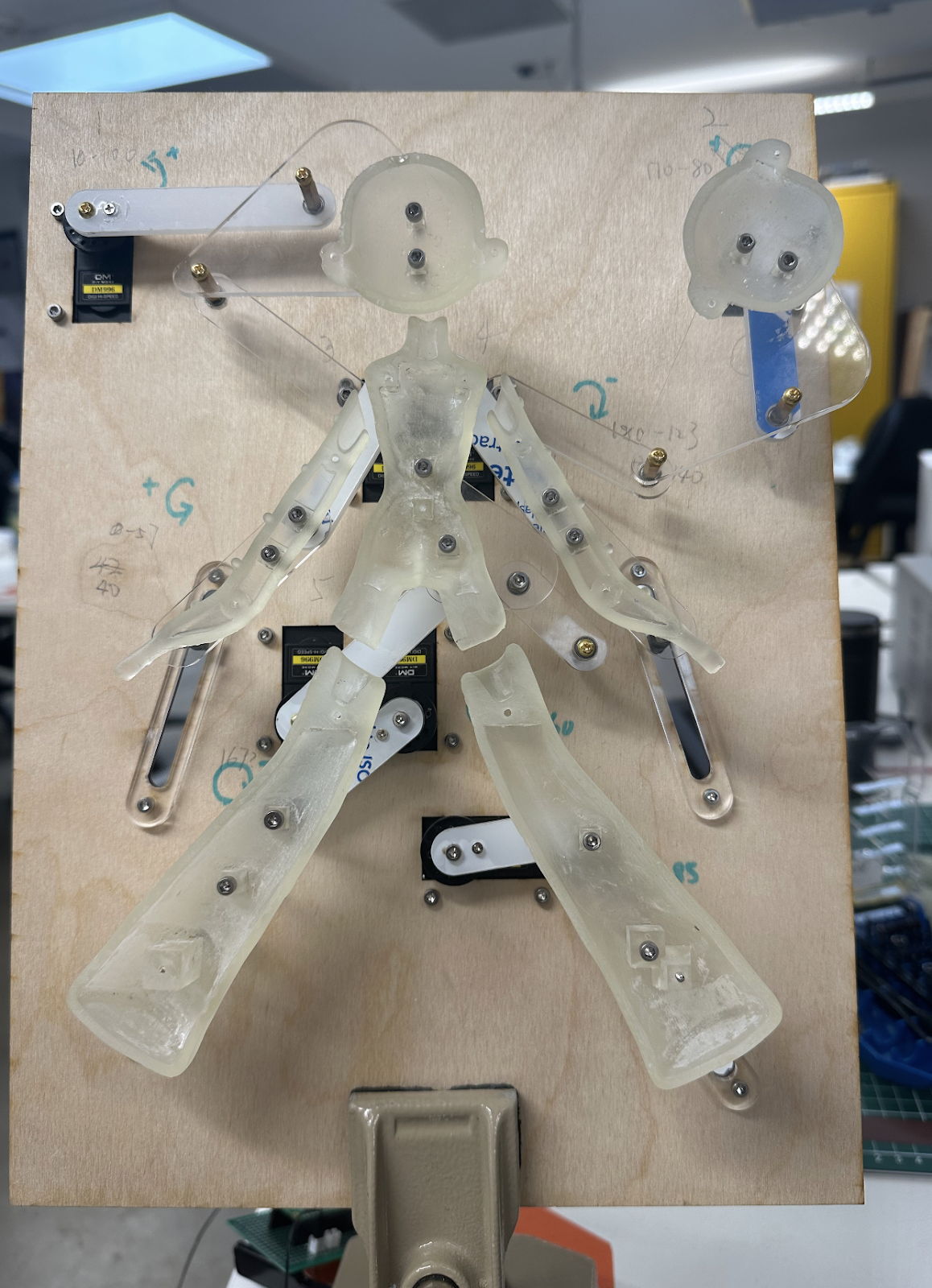
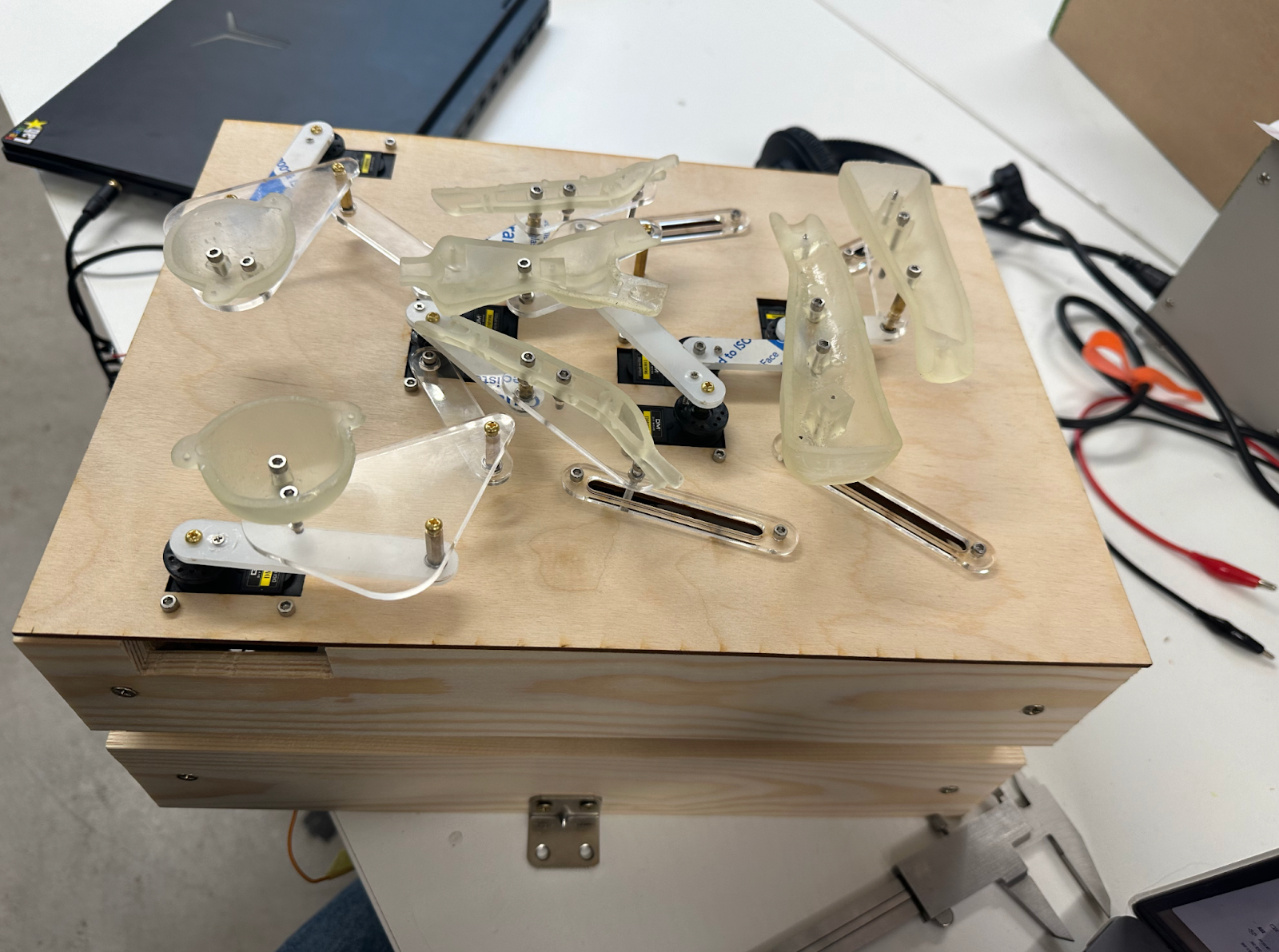
Codename: J__Who is in Kit is a mechanical installation in which a cute character repeatedly folds and unfolds through a servo-driven structure. Moving between a human-like body and stacked rectangular forms, the character shifts between emotional and emotionless states through its mask and mechanical choreography.
As part of the Second World series, Codename: J explores how characters, machines, and movement can begin to construct an alternative reality.
Mar 2024
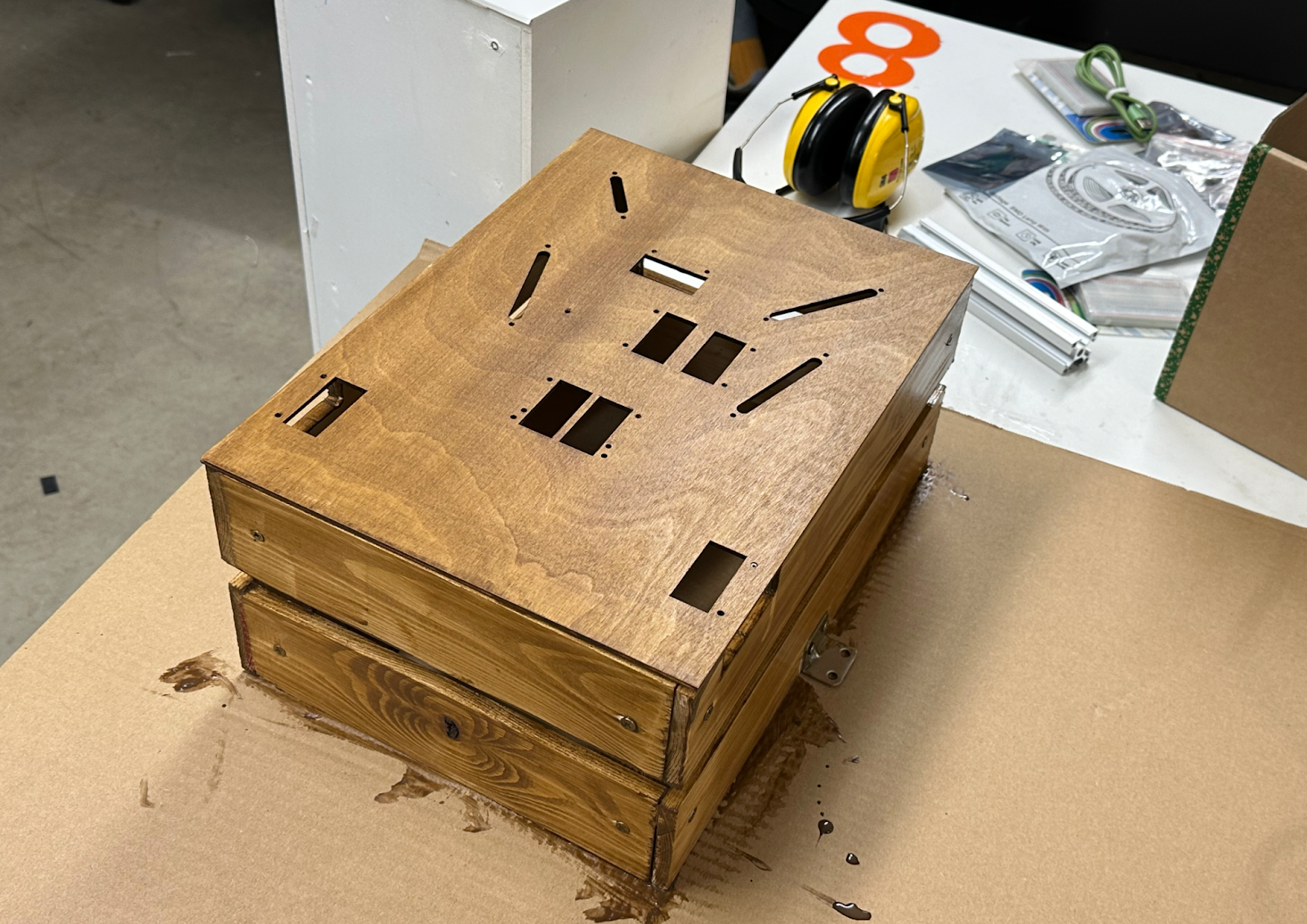
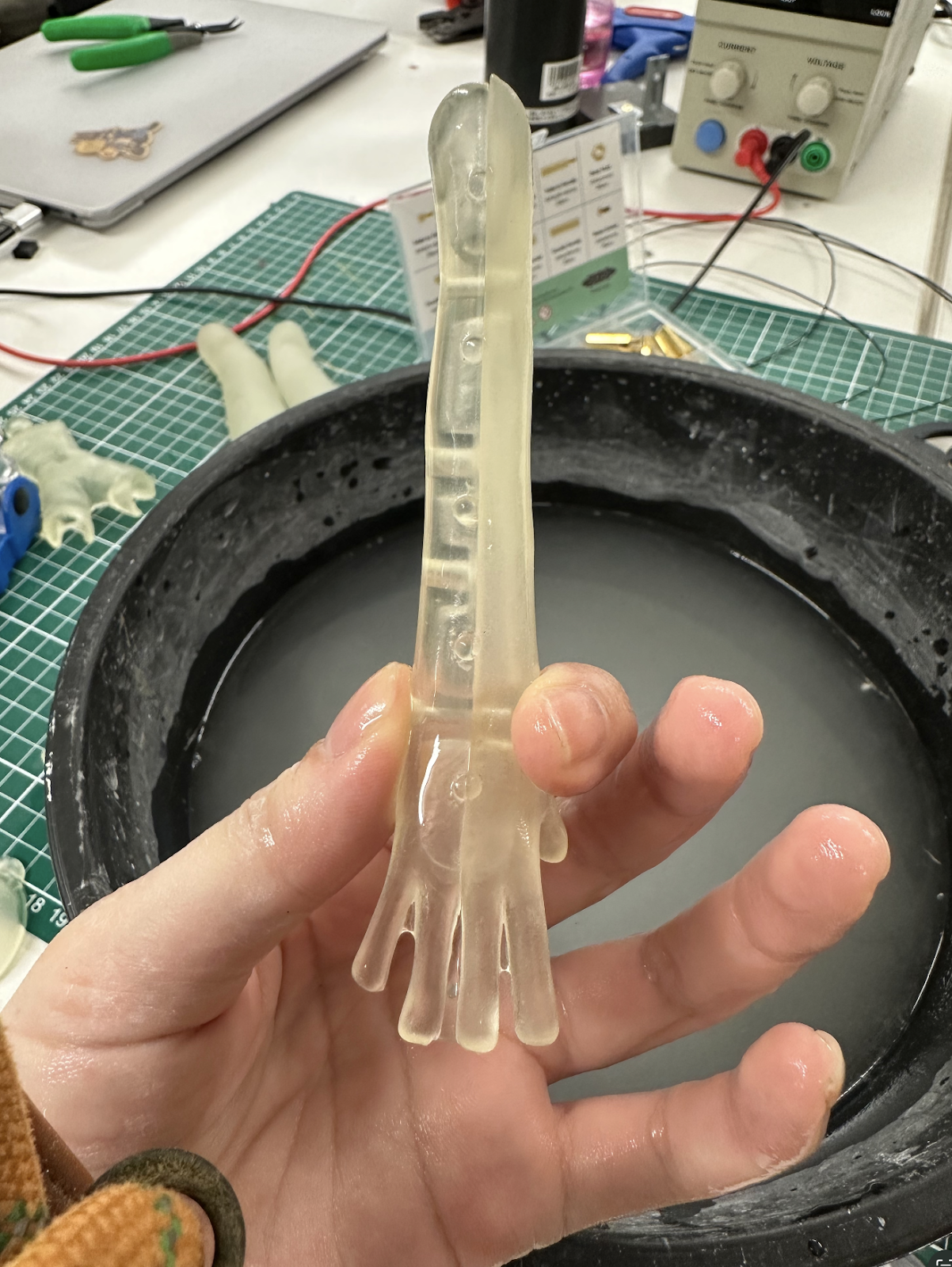
Wood, Resin, servos
Arduino, Fusion 360, Blender
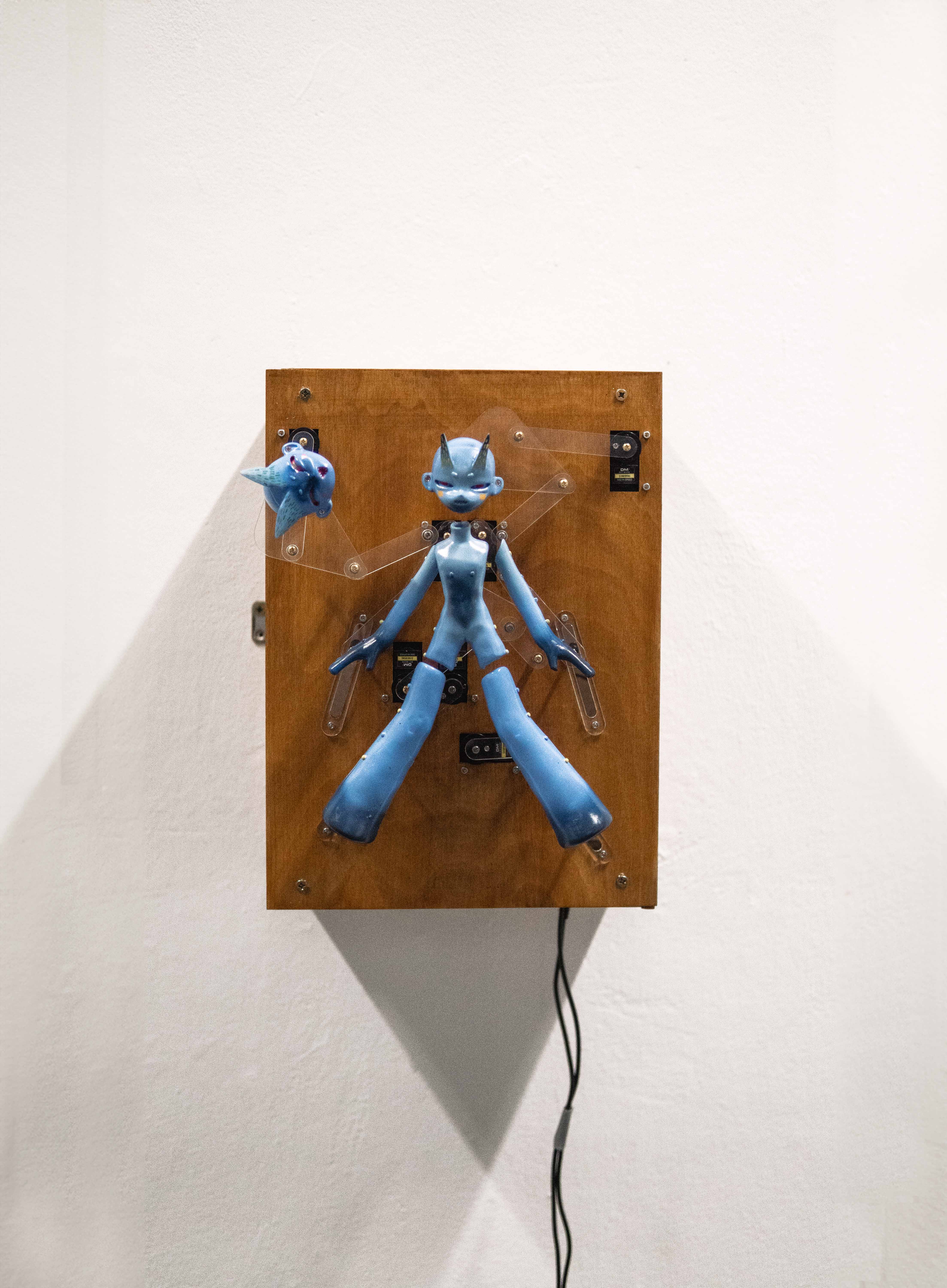
Codename: J imagines the possibility of a Second World: a world equivalent to our own, but generated entirely through computation. I call our universe the Original World, while the Second World is a constructed reality built by computers, machines, characters, and systems.
The project begins from a philosophical question: if Leibniz believed that our world is “the best of all possible worlds,” chosen by God, what happens when possible worlds are no longer divine creations, but computational processes? If every possible world can be understood as a different set of rules running through something like a cellular automaton, then God becomes less like a perfect creator and more like a world-machine, operating as a form of Turing machine. From this perspective, the Original World may not be the best or most complete world, but only one contingent result among many possible computational outcomes.
Against this uncertainty, Codename: J proposes the Second World as a pure computable world: a world without the undecidable, the unknowable, or the uncomputable. It is not simply a digital copy of reality, but a speculative environment where logic, perception, and matter are reorganized through mechanical movement and computational rules.
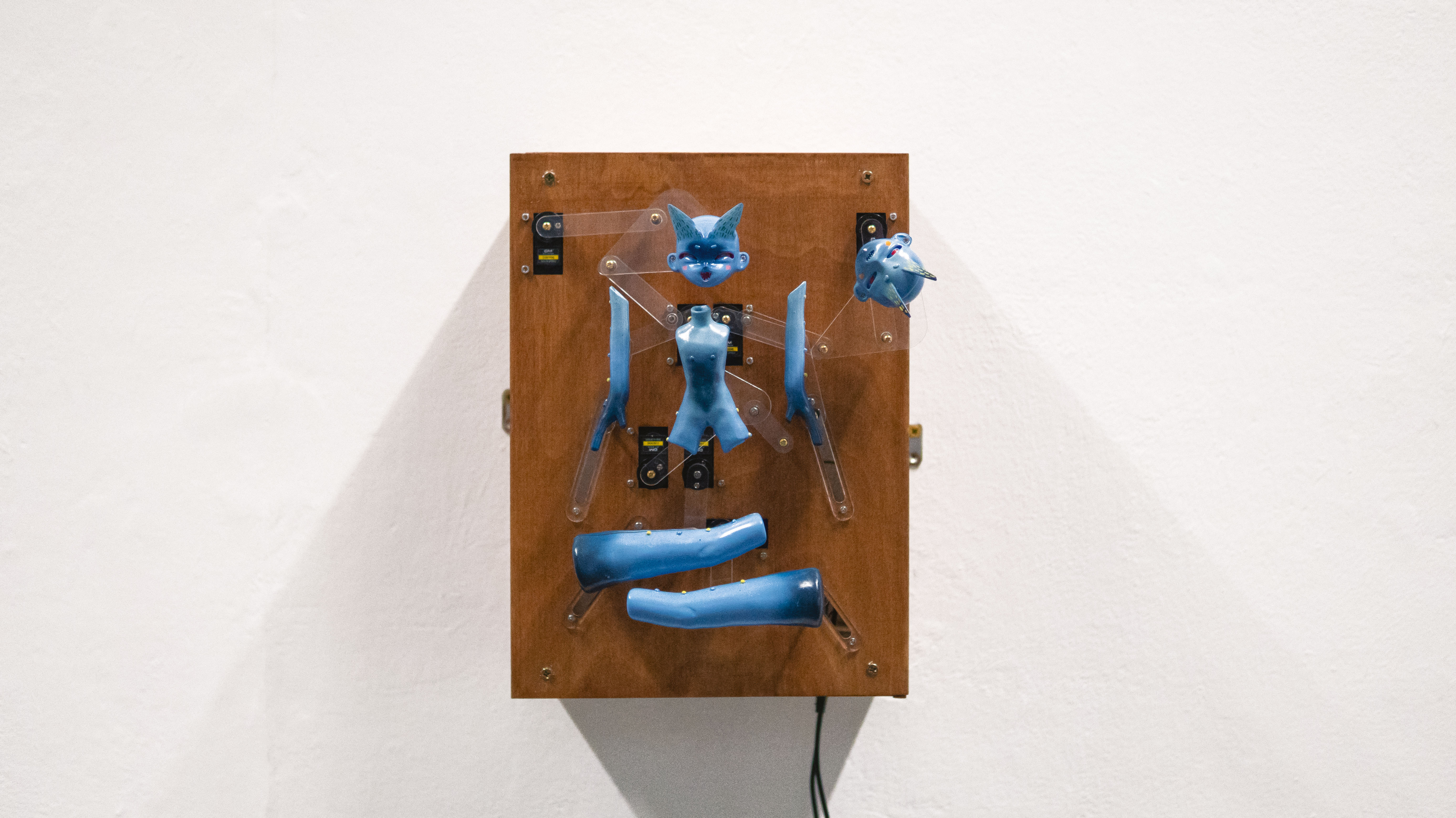
Through this constant cycle of assembly and collapse, Codename: J explores how worlds are made, perceived, and lost. By using cuteness as a surface language for complex systems, the project creates a tension between innocence and machinery, emotional appeal and logical structure, softness and control. It asks whether reality is something stable that we discover, or something temporarily generated through systems of observation, movement, and computation.
Characters
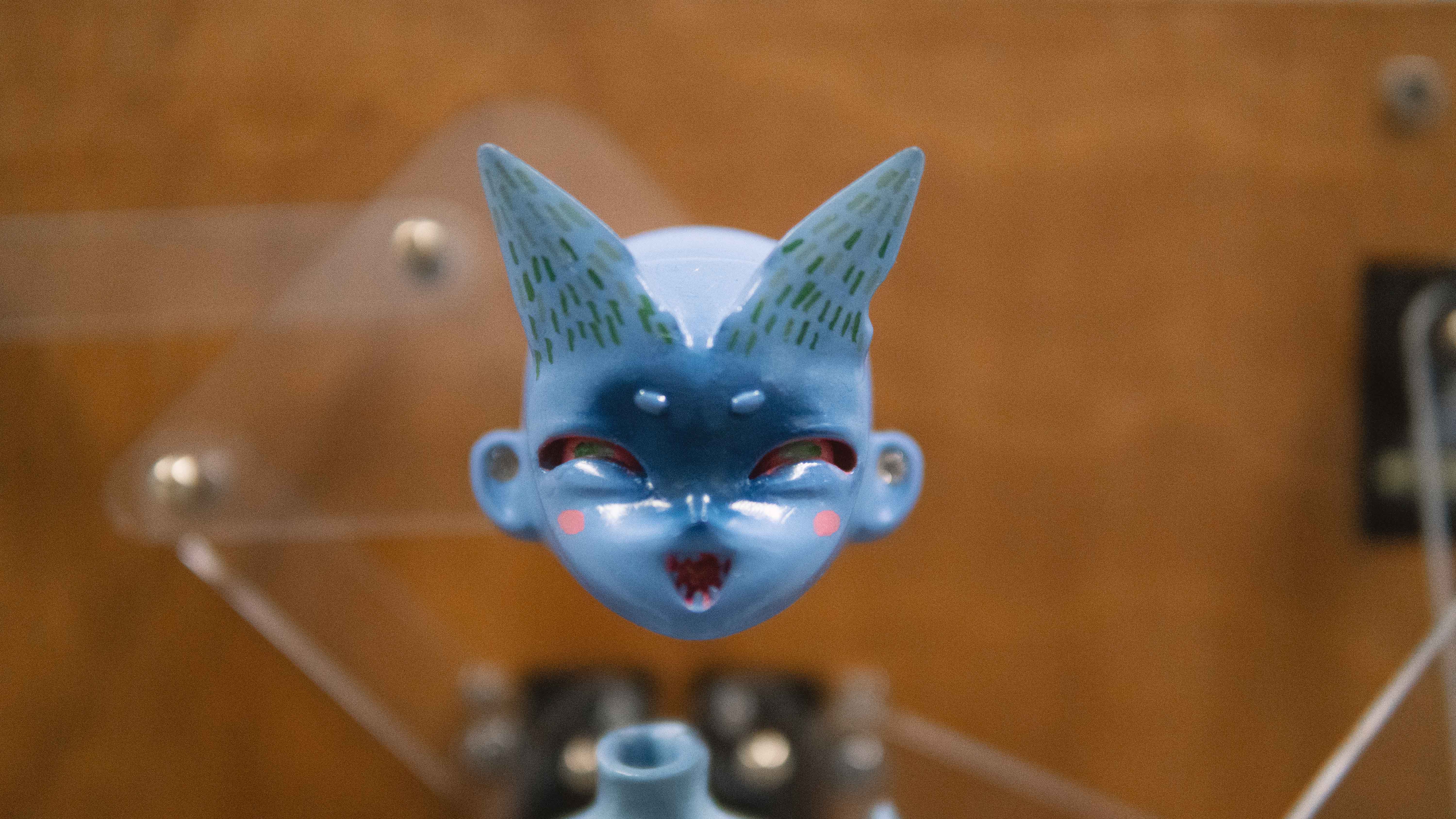
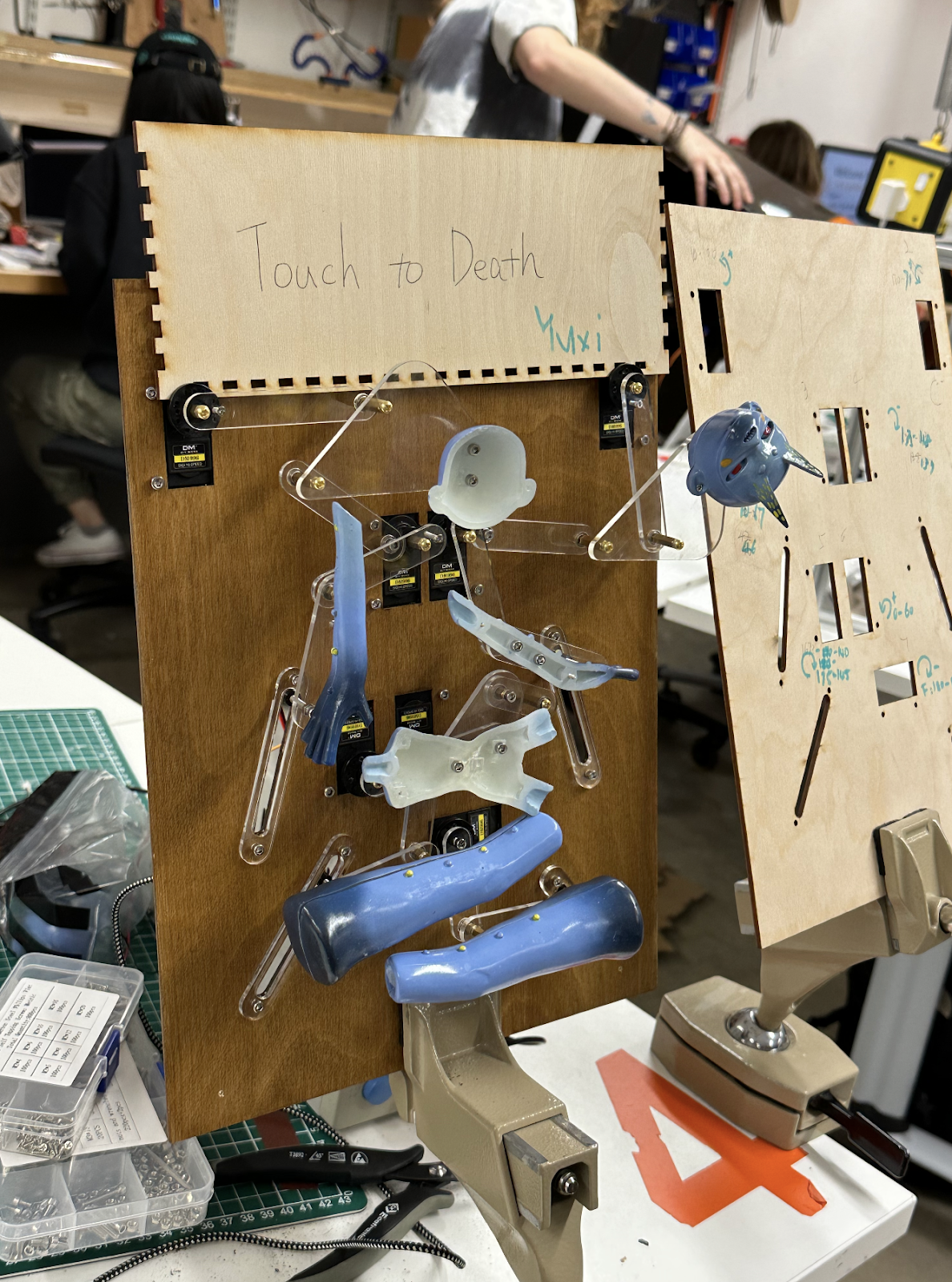
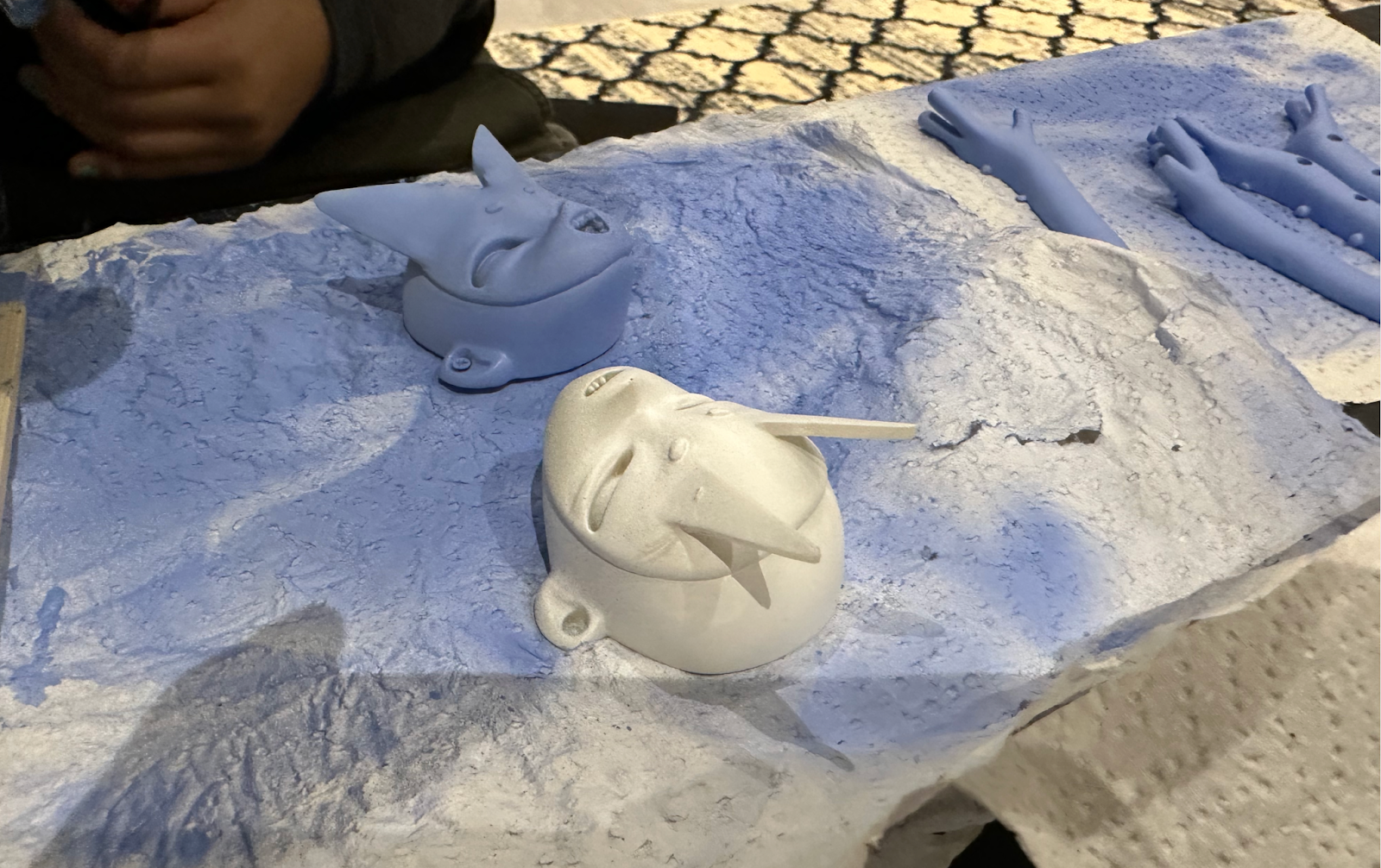
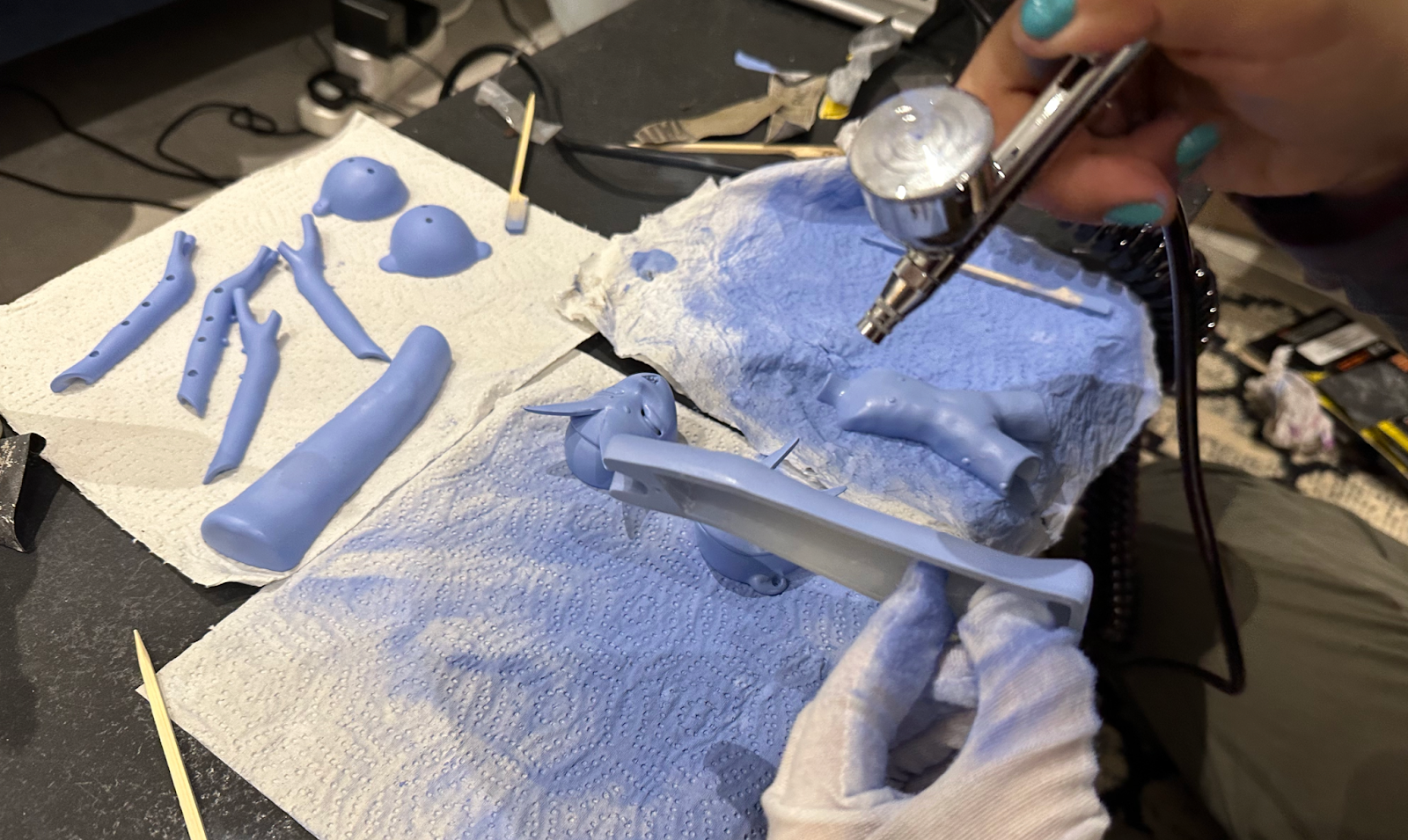
The characters have always played a crucial role in my work. I've pushed different characters into various concepts and have been waiting for these characters to automatically interconnect and create a world. The character Codename: J's image is derived from a standard 3D character model, set in an A-pose, which is the standard pose required for skeleton binding in 3D game software. The mask gives Codename: J emotions (expressions), facilitating transitions between different emotions and also transitions between emotional and emotionless states.
Cuteness becomes the visual language of this world. Soft colours, rounded forms, playful expressions, and toy-like bodies create an immediate sense of attraction and intimacy, inviting the audience to enter the work through pleasure, curiosity, and emotional recognition. However, this cuteness is not only decorative. It acts as a mask, a lure, and a system of communication. Beneath the charming surfaces are mechanical structures, computational logic, repetitive movements, and unstable processes of assembly and collapse.
The characters have always played a crucial role in my work. I've pushed different characters into various concepts and have been waiting for these characters to automatically interconnect and create a world. The character Codename: J's image is derived from a standard 3D character model, set in an A-pose, which is the standard pose required for skeleton binding in 3D game software. The mask gives Codename: J emotions (expressions), facilitating transitions between different emotions and also transitions between emotional and emotionless states.
Cuteness becomes the visual language of this world. Soft colours, rounded forms, playful expressions, and toy-like bodies create an immediate sense of attraction and intimacy, inviting the audience to enter the work through pleasure, curiosity, and emotional recognition. However, this cuteness is not only decorative. It acts as a mask, a lure, and a system of communication. Beneath the charming surfaces are mechanical structures, computational logic, repetitive movements, and unstable processes of assembly and collapse.
Technical Implementation
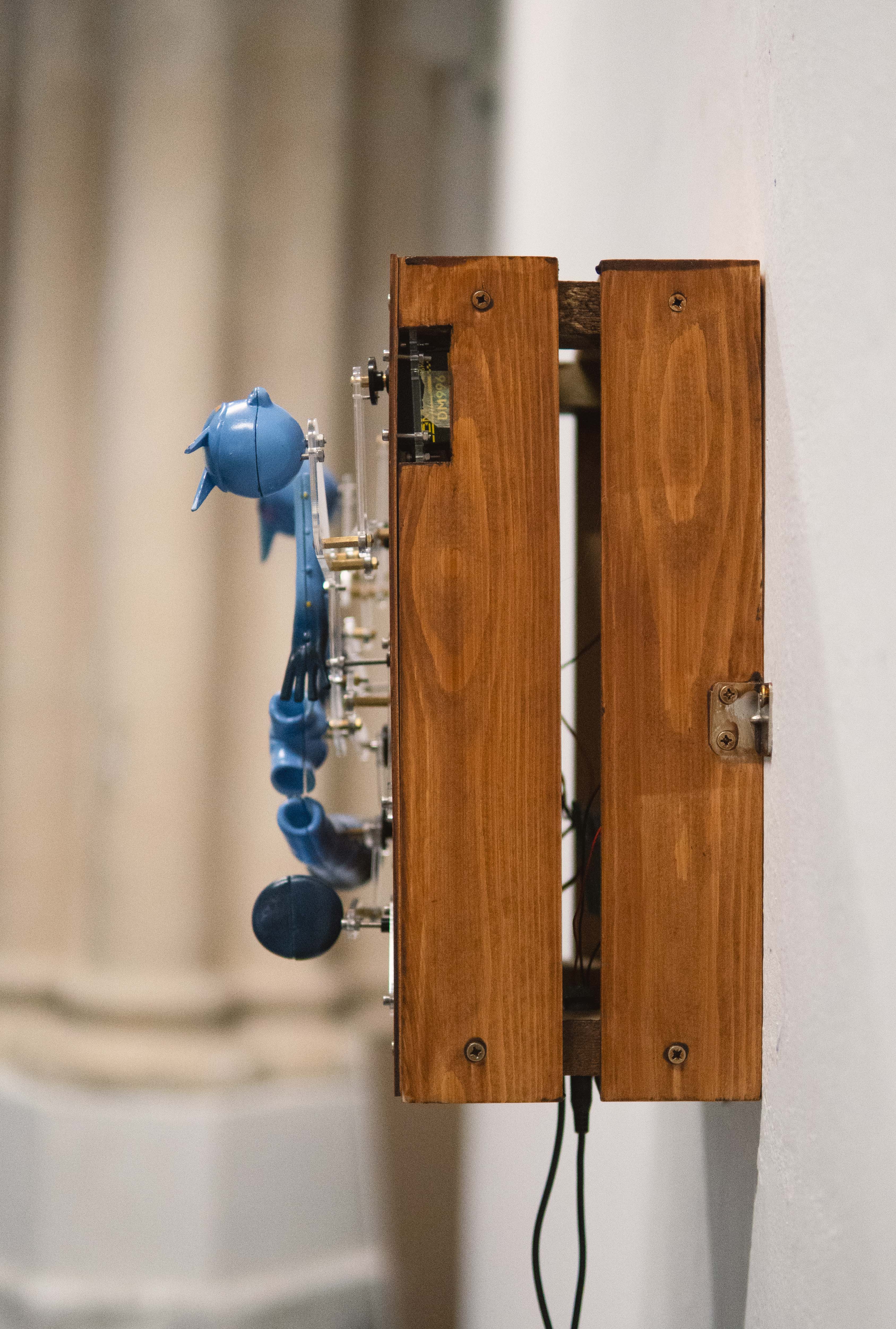
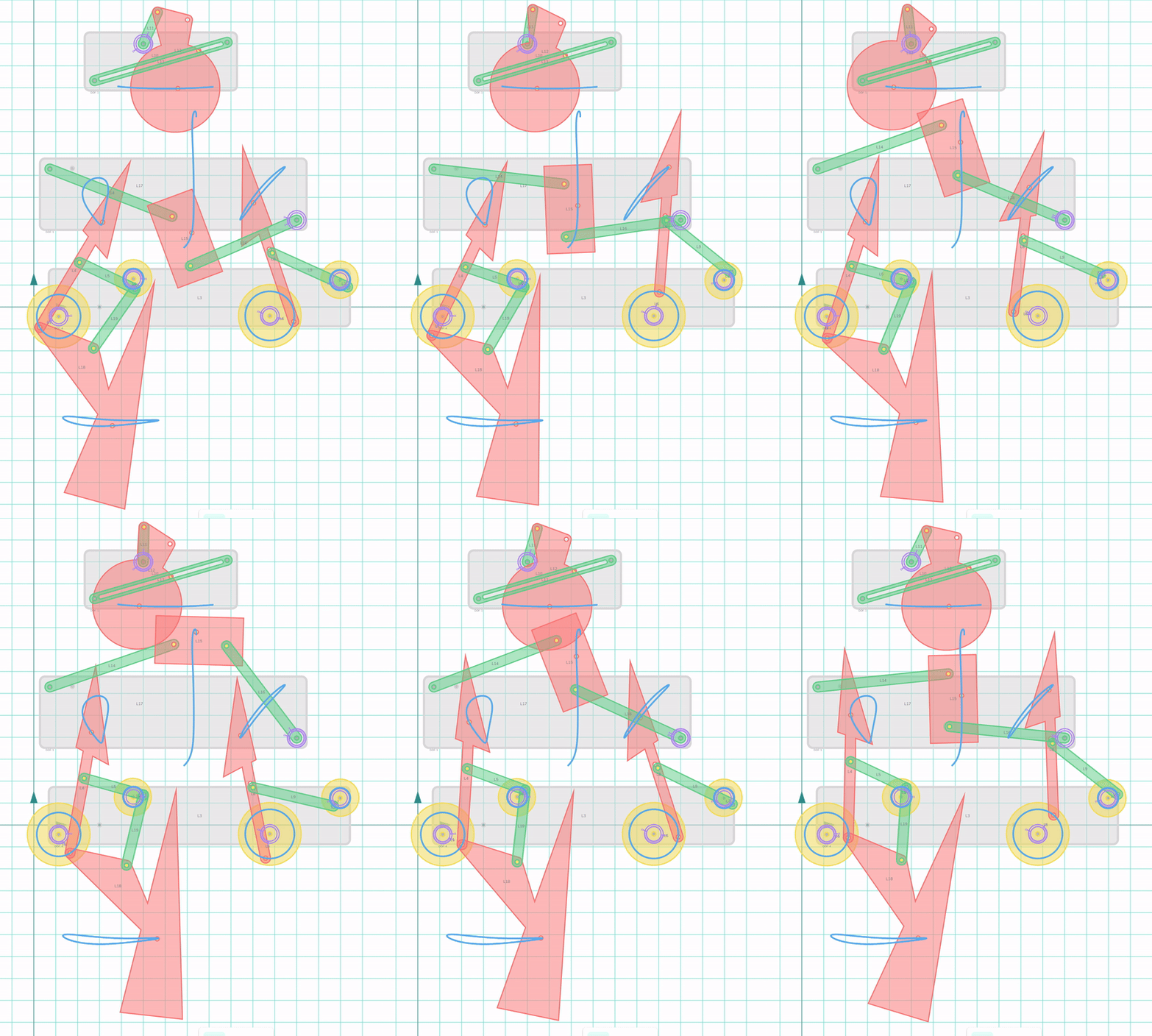
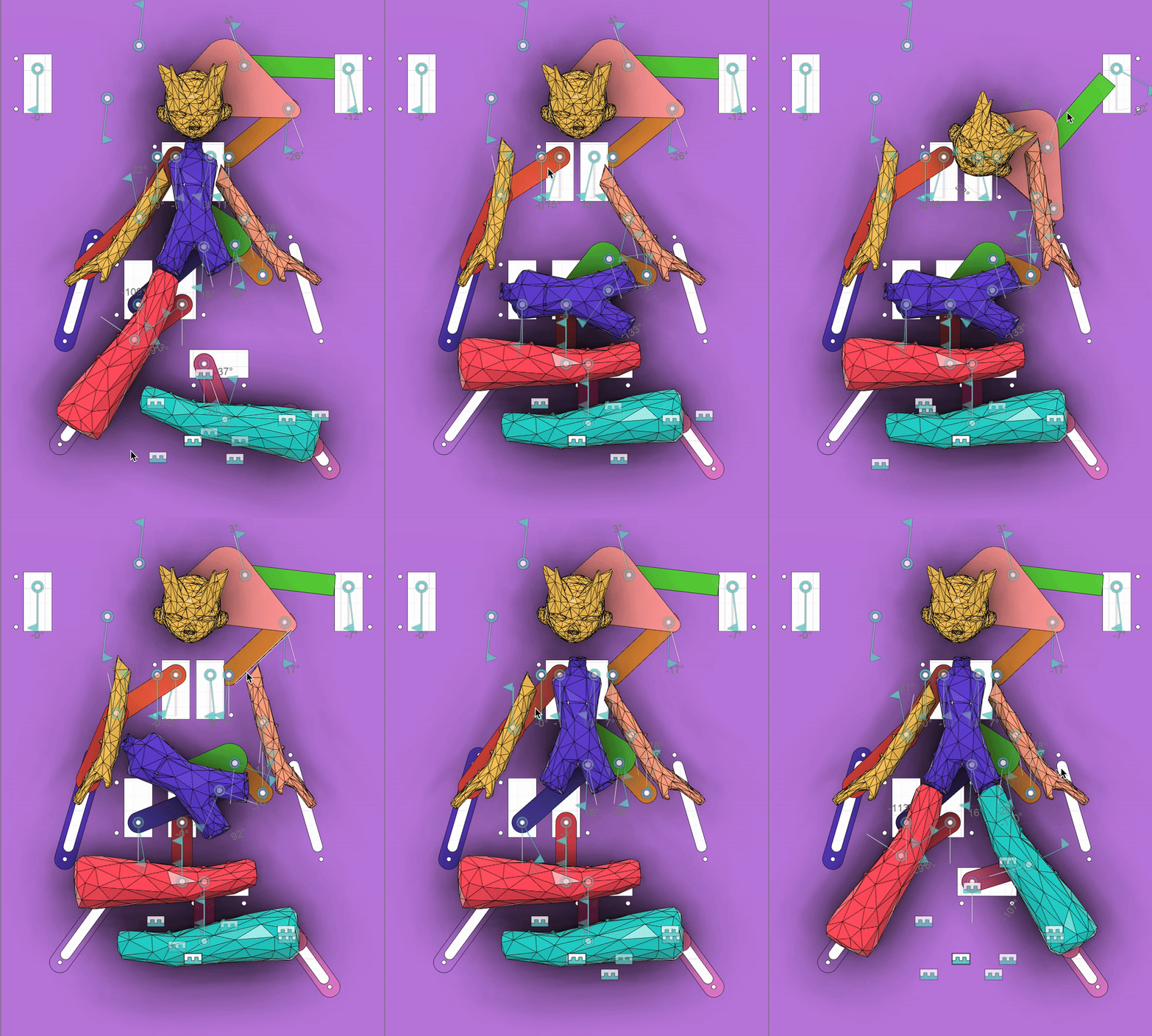
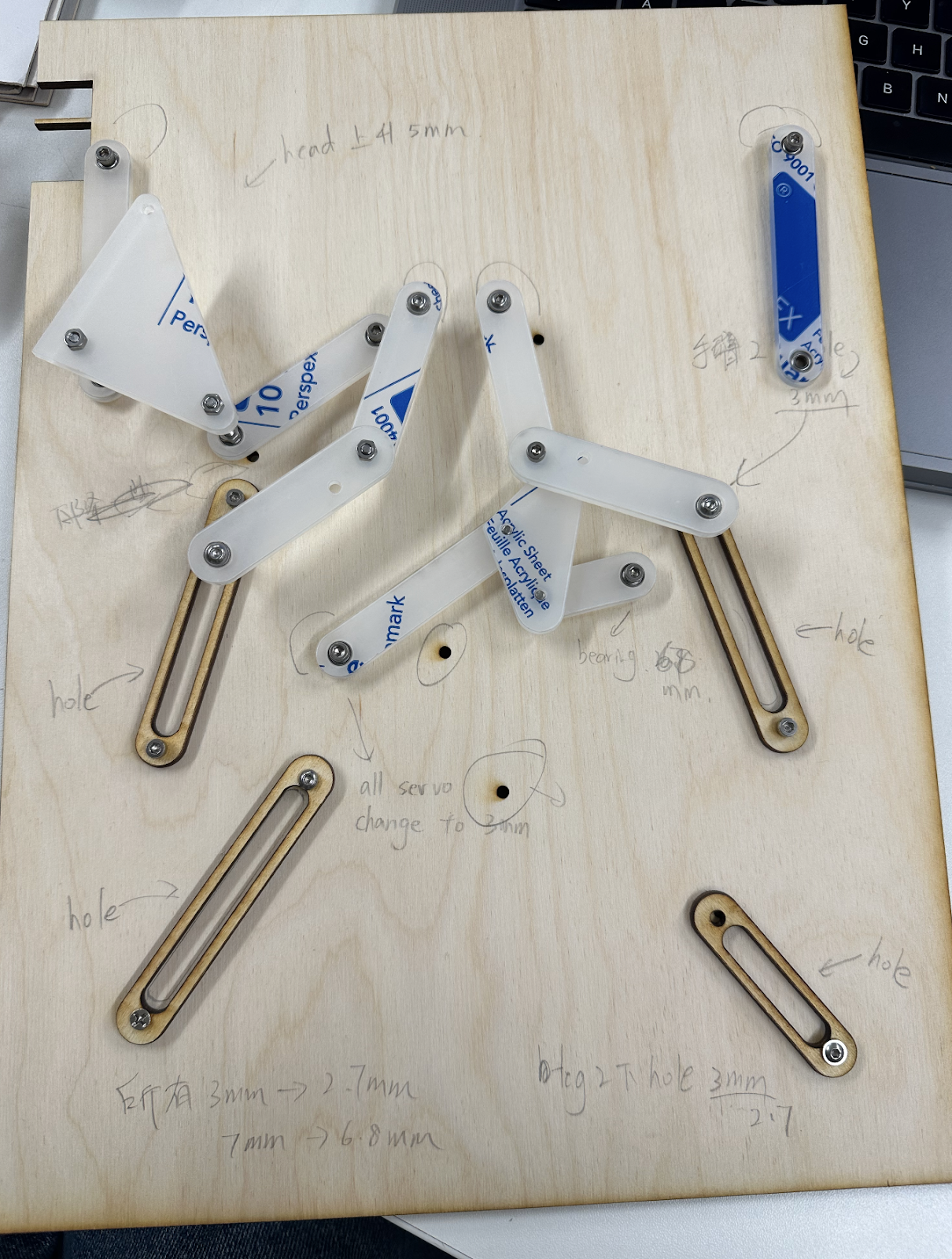
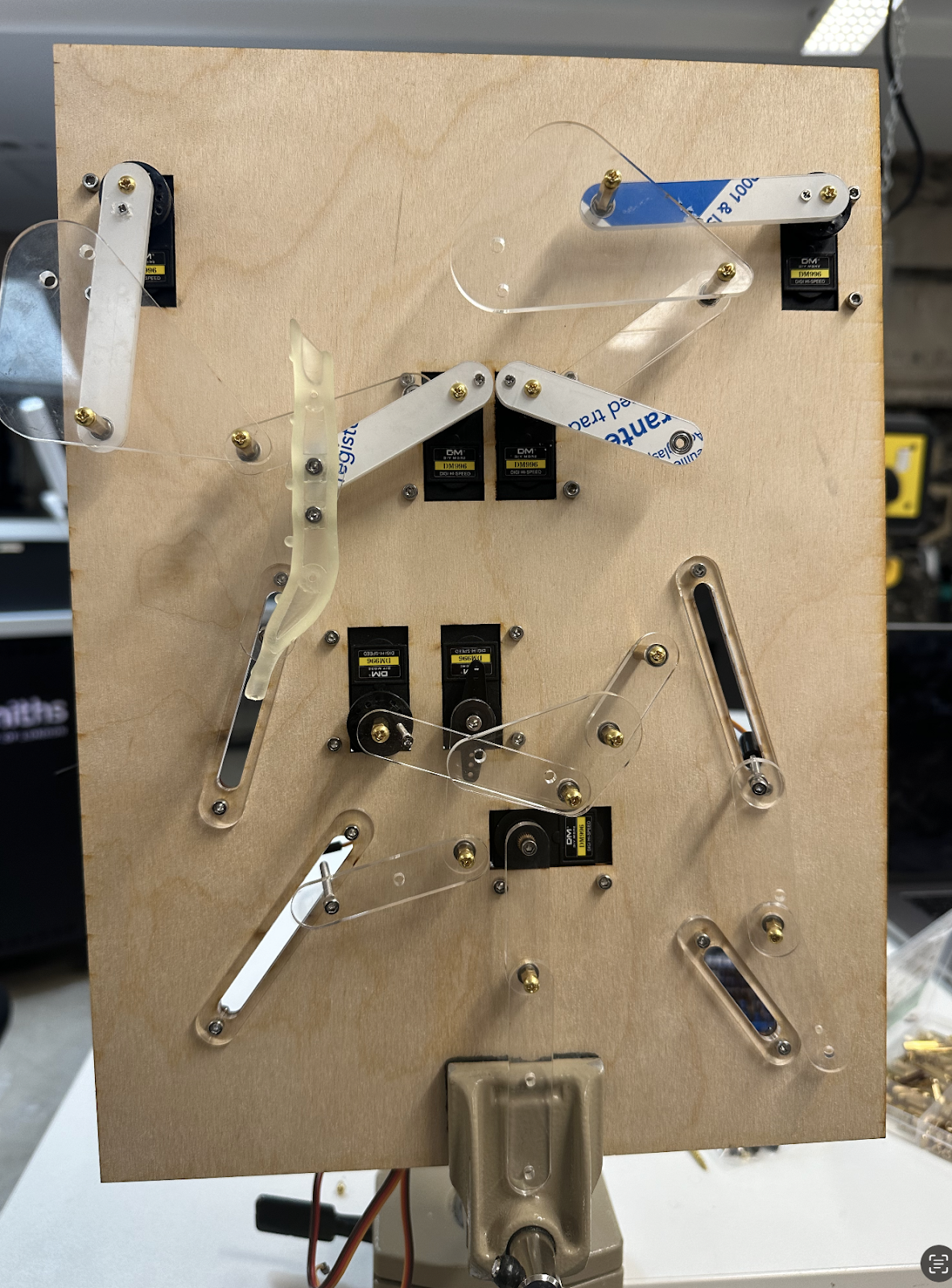
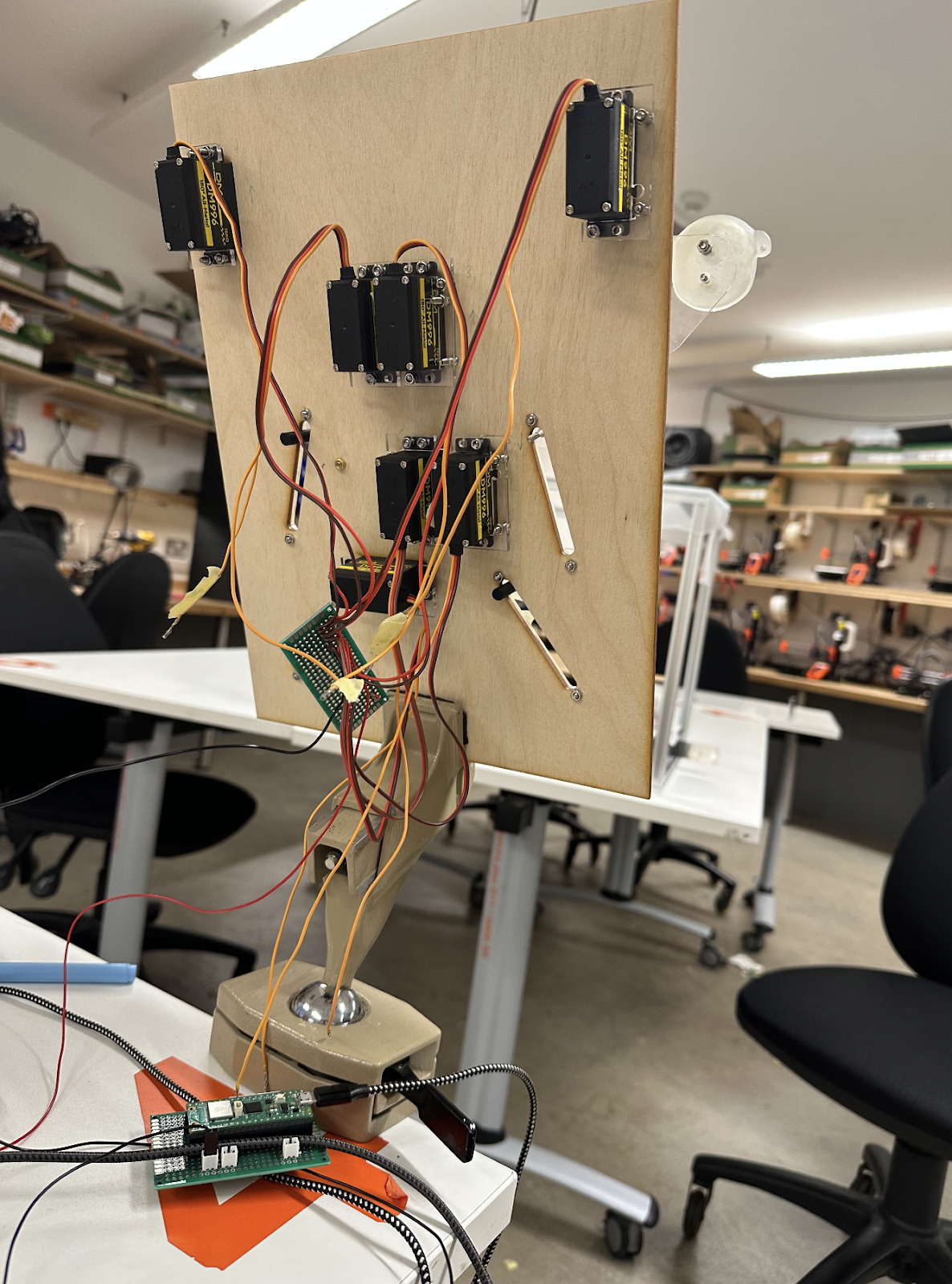
When I designed the mechanism, I deliberately made the trajectory of body movements more complex to enhance the unpredictability of the movement process. Of course, this unpredictability exists within the calculations of the human brain. In computer calculations, however, the final destination is determined at the moment of departure.I outlined the general structure in motiongen and then redesigned it in Fusion360 to conduct more precise simulations.Even so, when I actualized them, it still had plenty of problems. I made three prototypes to help me to build the structure. However, it is definitely worth it to design them in 3d software first.
Mechanisim
Prototypes
Painting